Art
that
compels
touch.
Haptillism, the Art of Touch by Elisabeth Busson.
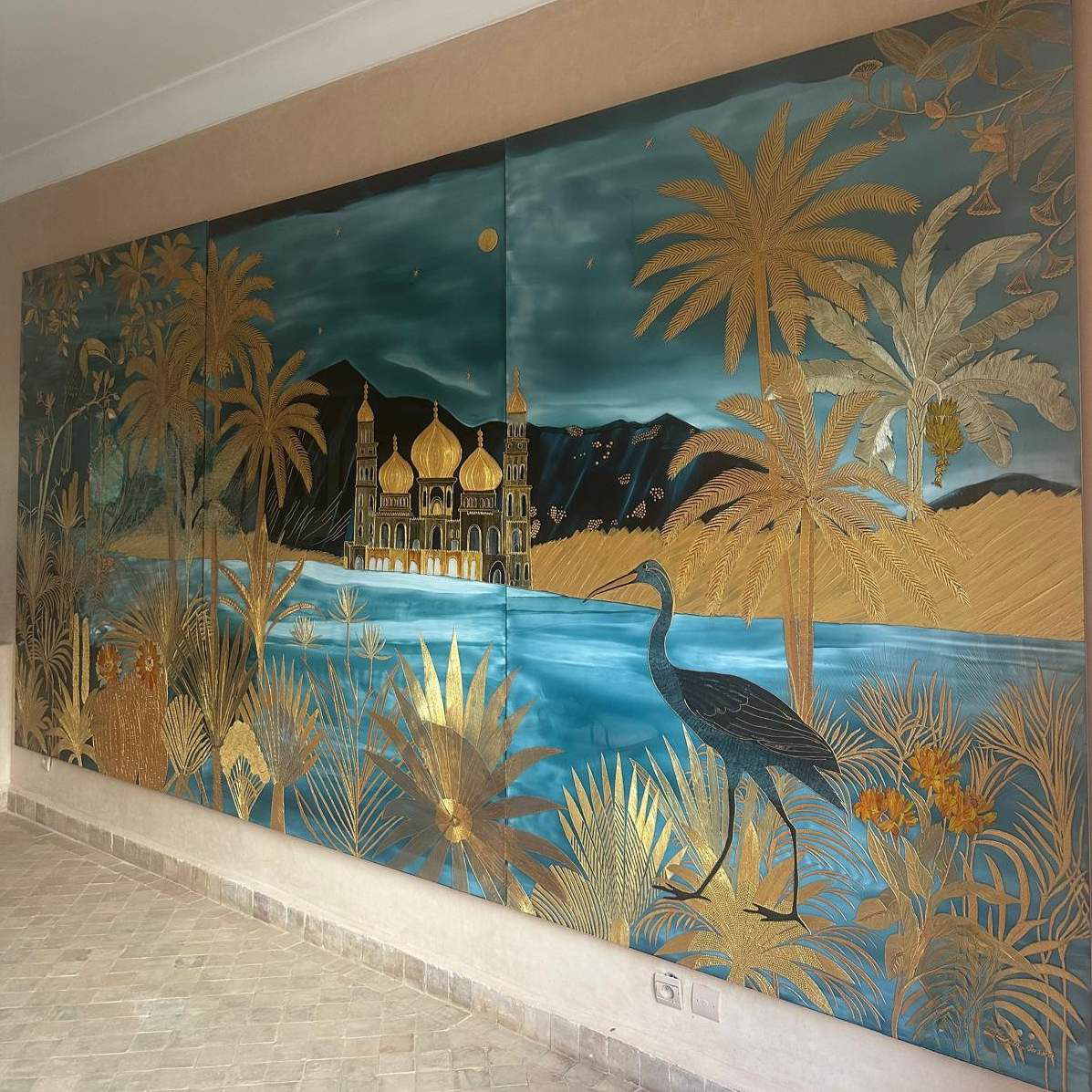
Haptillism transforms the museum's old prohibition — do not touch — into a sensory invitation: please touch.
Created by Elisabeth Busson, Haptillism makes touch a transgressive pleasure: a finger caught in the jam jar, suddenly freed from restraint. Emotion is no longer carried by sight alone. It passes through physical contact, grounding us in reality at a time when the body is so often erased by the virtual.
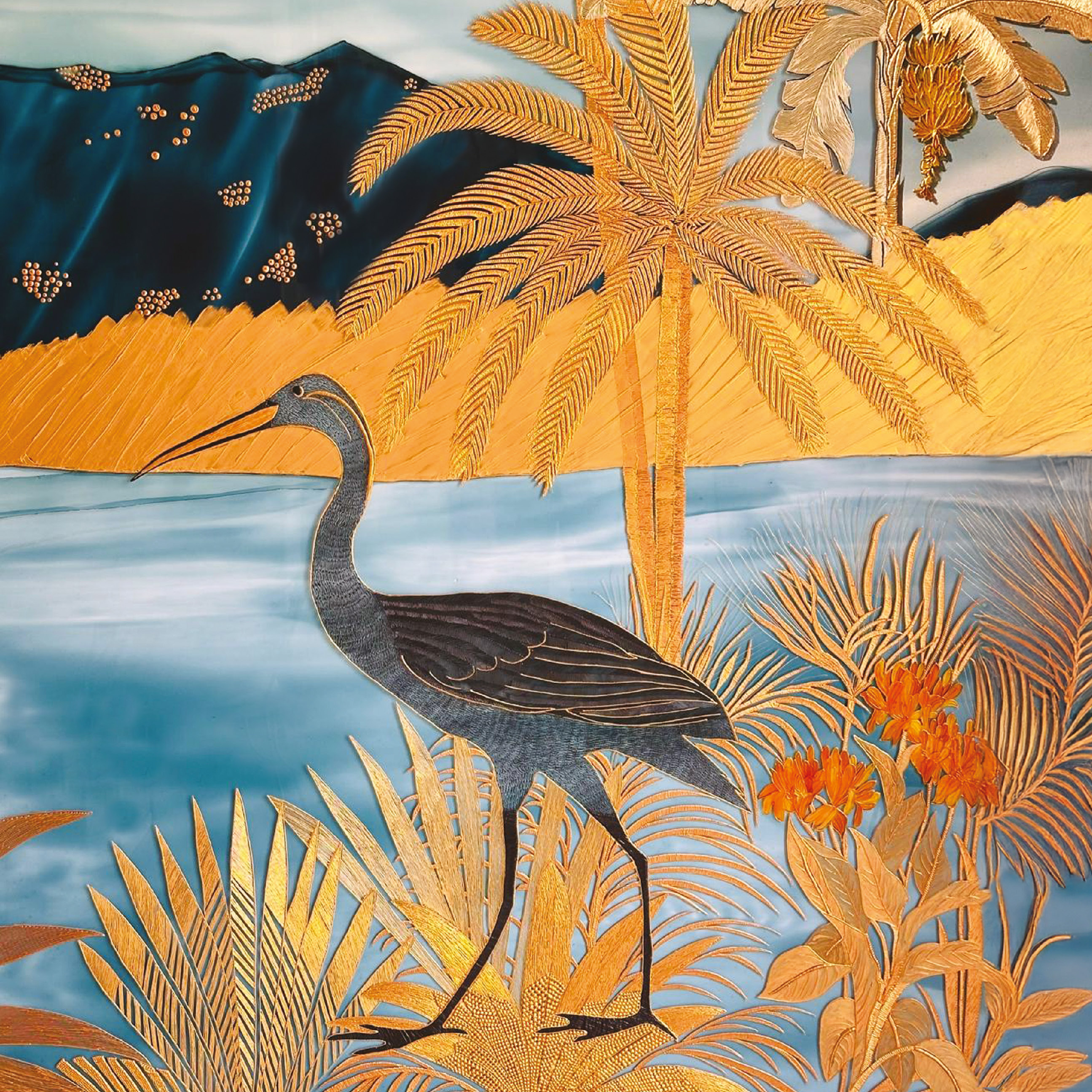
At the crossroads of stained glass and embroidery, form emerges through the meticulous accumulation of gestures. Their interlaced rhythm builds an architecture of light — stitch by stitch, by hand — without collage or external additions. Relief is born from gesture alone.
Symbolized by three ellipses (...), each work suggests a living story whose next chapter is left for the viewer to write. Seeing is only the beginning. Touch reveals the invisible. The eyes are at the fingertips.
Please touch.
The forbidden museum gesture becomes an intimate, deeply human invitation.
Light, felt.
Touch reveals what the eye alone cannot perceive: light itself, through the fingertips.
Gesture as structure.
Relief emerges stitch by stitch from hand-built rhythm, without collage or addition.
Against the virtual.
A return to the tangible and sensory — an antidote to the erasure of the body.
Works at hand.
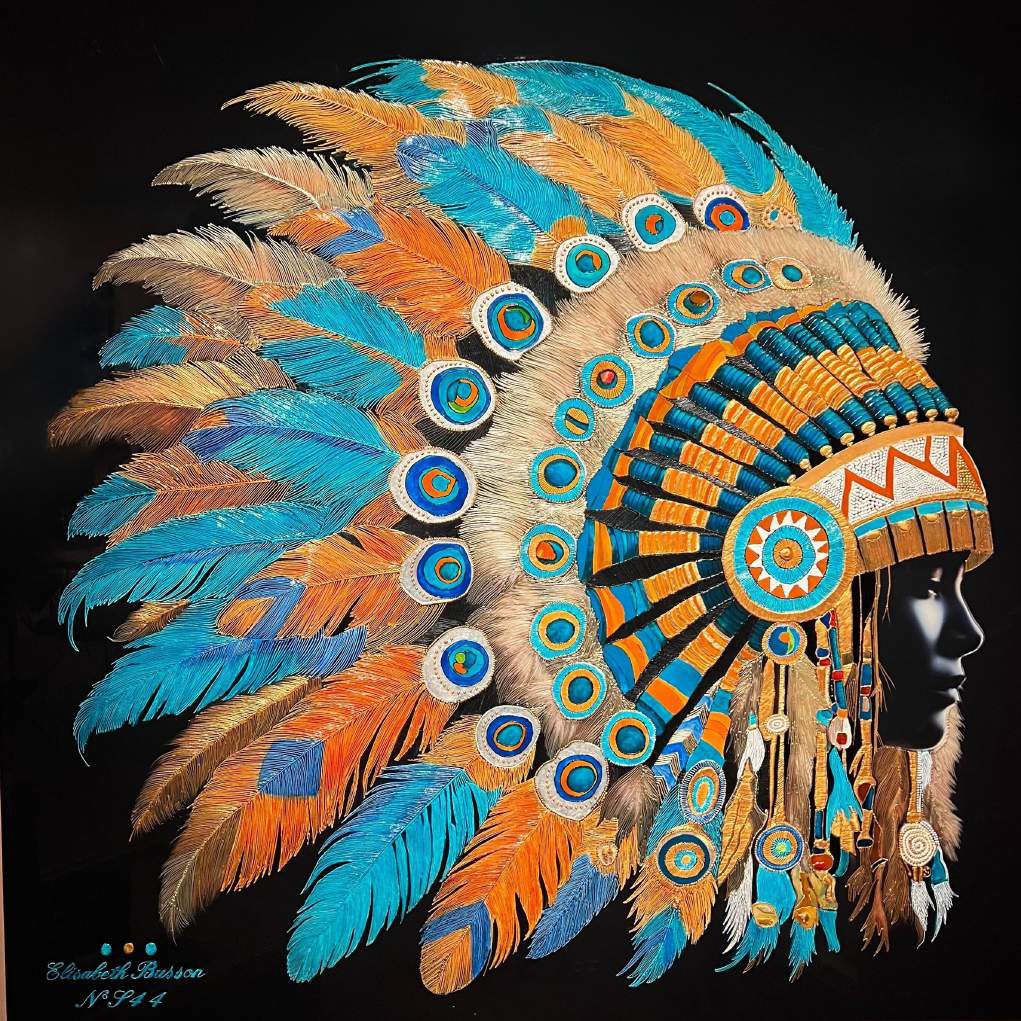
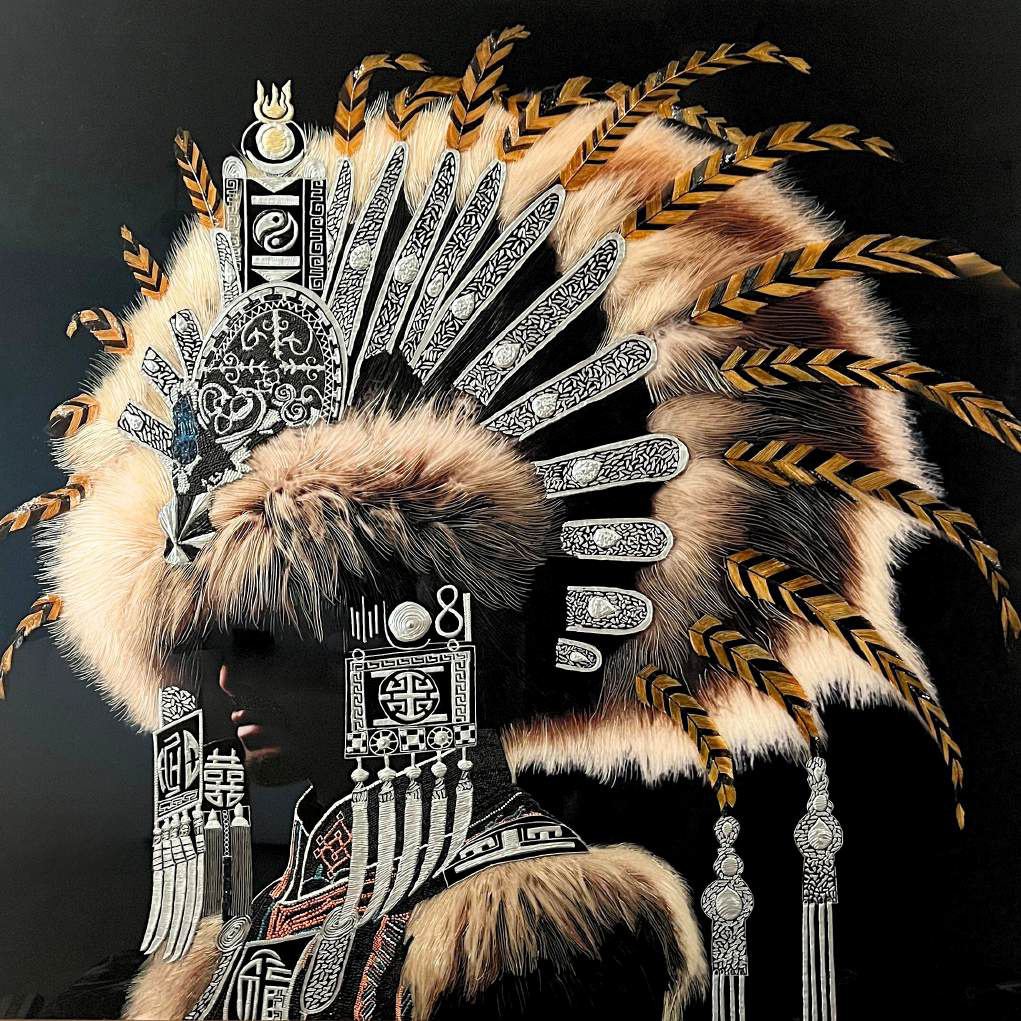
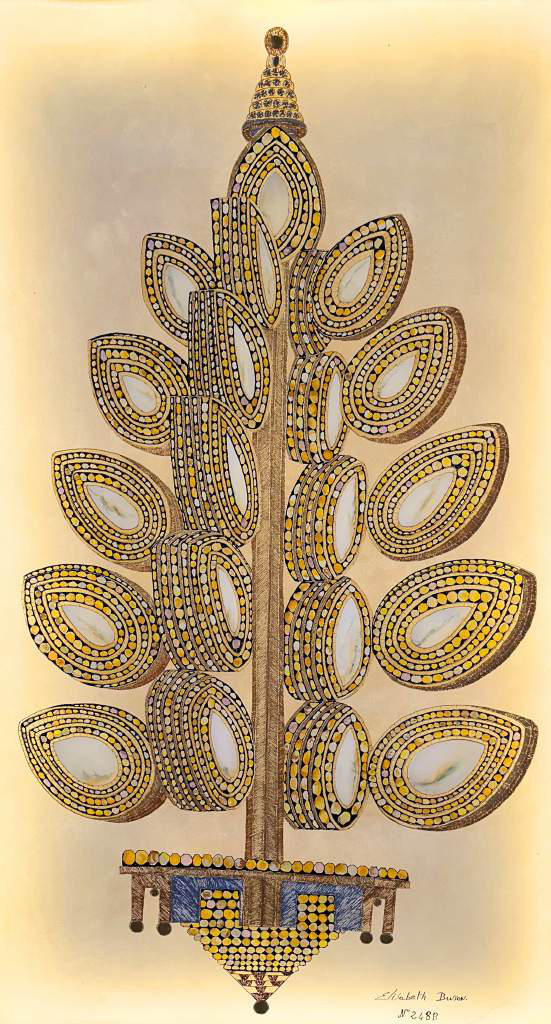
“The interplay of light-reflective materials, textured surfaces and panoramic formats evokes not only visual fascination — but a deep, almost instinctive desire to touch.”— Elisabeth Busson, on her practice
Elisabeth Busson.
Elisabeth Busson began her creative journey surrounded by renowned writers and painters. Her path led her from interior design at place de la Madeleine in Paris to the conception of bold luxury handbags and silk scarves under the Marquise Paris label, distributed internationally.
She now finds full freedom in painting. From l'Atelier in Marrakech she creates sculptural wall pieces and unique artworks inspired by warrior-like ornamental traditions — the ceremonial headdress, the sacred pattern, the symbolic architecture — symbols of power refracted through a contemporary lens.
Each piece is hand-painted in relief on Plexiglas through a technique she has developed herself: a meticulous choreography of light-reflective grounds, textured layers, and panoramic formats that evokes not only fascination — but a deep, almost instinctive desire to touch.
Pigment, sculpted on Plexiglas.
The substrate
A panoramic sheet of Plexiglas — translucent, dimensional — chosen for its capacity to hold and refract light.
The relief
Pigment is laid in modelled passes — hand-built strata, inscribed and lifted, until the surface holds breath.
The light
The ground is metallic, the pigment matte. Light becomes the fourth pigment — alive with the hour, the room, the eye.
The signature
Each piece is unique, signed, and accompanied by a numbered Certificate of Authenticity from l'Atelier.